





.svg)
Grooming is about far more than appearances — a good routine helps keep your pet's skin and coat healthy, gives you the chance to spot problems early, and, done right, can be a genuinely enjoyable part of your pet's week.
How often your pet needs grooming depends on their coat type. Short-haired pets often need only a weekly brush, while long-haired breeds may need daily attention to prevent matting. Regular brushing removes loose fur and distributes natural oils through the coat, keeping it healthier and reducing shedding around the house.
Bathing needs vary by pet and lifestyle — most dogs don't need bathing more than once every few weeks unless they've gotten particularly muddy, as over-bathing can strip natural oils and dry out the skin. Using a shampoo formulated for pets, rather than human products, helps protect their skin's natural pH balance. Cats are typically very good at self-grooming and rarely need bathing unless there's a specific reason.
Overgrown nails can be uncomfortable and affect how your pet walks. How often trims are needed depends on activity level and surface — dogs that walk regularly on hard ground may need trims less often than those mainly on grass or carpet.
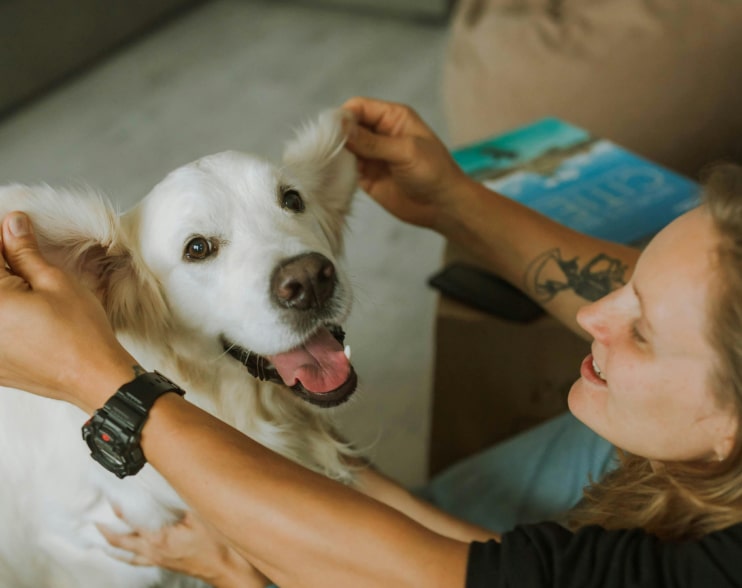
A regular check for redness, odour or excessive wax build-up can catch ear problems early, particularly in breeds with floppy ears or those prone to ear infections.
Dental health is often overlooked in home grooming routines, but it plays a big role in overall wellbeing. Introducing toothbrushing gradually, alongside dental-friendly chews or diets, can make a real difference over your pet's lifetime.
A grooming session is also a health check in disguise — it's often the easiest time to notice a new lump, sore patch, or parasite before it becomes a bigger problem.
Short, calm sessions with plenty of praise or a treat at the end help your pet associate grooming with something positive rather than something to be endured. If your pet is particularly resistant to certain aspects of grooming, such as nail trims, it's worth asking your vet or nurse for advice rather than persisting with something that's causing distress — our small animal nurse clinics are a good starting point for extra support with tricky grooming habits.
Signs to look out for include excessive shedding, dull or brittle fur, flaky skin, or bald patches. Any of these are worth mentioning at a check-up, as they can sometimes point to an underlying health issue.
It's best avoided — human skin and pet skin have different pH levels, and human products can cause irritation or dryness. A shampoo formulated specifically for pets is a safer choice.
This varies by individual, but as a general guide, if you can hear nails clicking on hard floors, they're usually due a trim.
A little regular grooming goes a long way toward a happier, healthier pet — and gives you an easy way to keep an eye on their overall condition.
