





.svg)
Regular exercise is one of the simplest ways to support your dog's physical and mental health, helping to manage weight, maintain joint mobility, and burn off energy that might otherwise turn into boredom-driven behaviour at home.
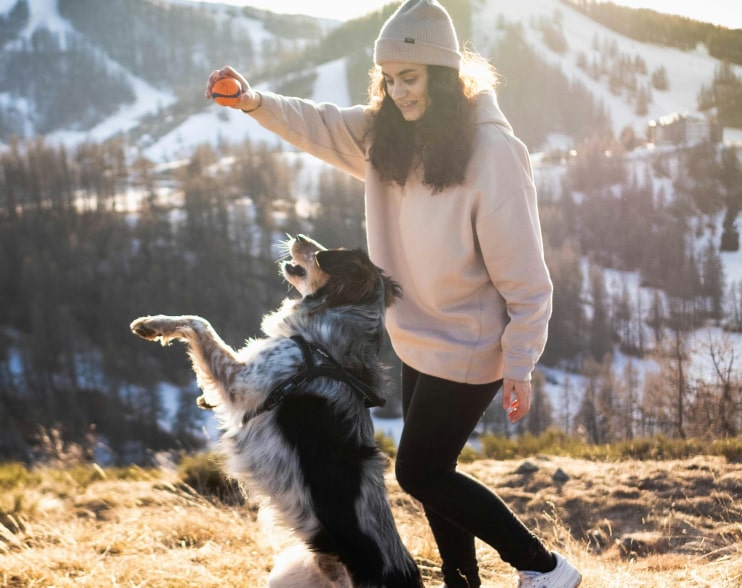
While a daily walk is a great foundation, dogs often benefit from variety. Fetch and tug games build short bursts of high-energy activity, while longer, exploratory walks along new routes give your dog plenty to sniff and investigate — which is just as tiring, mentally, as physical exercise. Swimming, where safe and appropriate for your dog's breed and fitness level, is another excellent low-impact option, particularly for older dogs or those with joint concerns.
Puppies need controlled, shorter bursts of exercise to protect developing joints and growth plates. A general guide many owners follow is around five minutes of structured exercise per month of age, twice a day, though this varies by breed — it's worth asking for guidance specific to your puppy.
Most adult dogs do well with a mix of daily walks and higher-energy play, adjusted to their individual fitness and breed characteristics. Working and sporting breeds often need considerably more than companion breeds to stay content.
Older dogs often do best with gentler, more frequent outings rather than one long walk, allowing for rest between activity. Keeping an eye out for stiffness or reluctance to move is particularly important as dogs age.
Mental stimulation tires a dog out just as effectively as physical exercise — a sniffy walk can be as valuable as a fast one.
Always factor in the weather — dogs can overheat quickly on warm days, so early morning or evening walks are safer in summer, and hot pavements can burn paw pads. In colder months, some breeds benefit from a coat, and it's worth checking paws for ice or grit afterwards. If you're walking in farmland or near livestock, keeping dogs on a lead protects both your dog and any animals nearby — something our farm team often gets asked about by dog-owning clients in the local area.
This varies significantly by breed, age and individual fitness — a working breed in their prime may need well over an hour a day, while a smaller companion breed or a senior dog may need considerably less.
Occasional mild stiffness after a particularly active day isn't unusual, but ongoing or worsening stiffness, limping, or reluctance to exercise is worth getting checked over rather than waiting to see if it improves.
Most dogs can swim, but not all enjoy or are suited to it, and some breeds are naturally poor swimmers due to their body shape. Always supervise closely, especially on a dog's first few swims.
Keeping exercise varied, appropriate to your dog's age and fitness, and consistent is one of the best long-term investments you can make in their health.
